Why STEM Education Is Shaping the Future of Learning
STEM education is transforming the way students learn by combining science, technology, engineering, and mathematics with critical thinking and real-world problem-solving. Discover why STEM is shaping the future of education, preparing learners for tomorrow’s careers, and fostering innovation in an increasingly digital world.
Introduction: Preparing Students for a Technology-Driven World
In today’s rapidly evolving digital landscape, students need more than traditional academic knowledge to succeed. STEM education equips learners with the technical skills, critical thinking abilities, and innovative mindset required to thrive in a technology-driven world. By integrating science, technology, engineering, and mathematics, STEM prepares students for future careers and the challenges of the modern workforce.
Why STEM Matters More Than Ever
The world is changing rapidly, and education must evolve to keep pace with new technologies and global challenges. STEM education, which stands for Science, Technology, Engineering, and Mathematics, has become one of the most important approaches to preparing students for the future. It encourages learners to think critically, solve real-world problems, and develop innovative solutions through hands-on experiences. At Modernage School & College, we believe that STEM education goes beyond teaching technical subjects—it builds curiosity, confidence, and creativity. By integrating STEM into everyday learning, students gain practical skills that prepare them for higher education, emerging careers, and lifelong success in an increasingly digital world.
Science Beyond the Textbook
Encouraging Curiosity Through Practical Learning
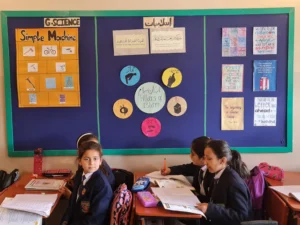
Science is most effective when students experience it through observation, experimentation, and discovery rather than simply reading about it in textbooks. Practical science activities encourage learners to ask questions, investigate ideas, and understand how scientific principles apply to everyday life. Laboratory experiments, research projects, and interactive demonstrations help students build analytical thinking and improve their understanding of complex concepts. At Modernage School & College, science education inspires curiosity and encourages learners to become active participants in the learning process instead of passive observers.
Technology as a Powerful Learning Tool
Developing Digital Skills for the Future
Technology has transformed every aspect of modern life, making digital literacy an essential skill for every student. Today’s learners must know how to use technology not only for communication but also for research, collaboration, creativity, and problem-solving. Modern classrooms integrate interactive learning platforms, educational software, and digital resources that make lessons more engaging and effective. Students also learn responsible online behavior, digital safety, and ethical technology use. These experiences prepare them for higher education and future careers where technological competence is a fundamental requirement.
Engineering Through Creative Problem-Solving
Learning by Designing and Building
Engineering encourages students to transform ideas into practical solutions. Through hands-on projects and collaborative activities, learners design models, build prototypes, and solve challenges that require creativity and logical thinking. Rather than focusing only on theoretical knowledge, engineering education promotes experimentation and innovation. Students learn to work in teams, evaluate different solutions, and improve their designs through continuous testing. These experiences develop resilience, adaptability, and confidence—qualities that are valuable in every profession.
Mathematics as the Foundation of Innovation
Applying Mathematical Thinking in Everyday Life
Mathematics is much more than solving equations or memorizing formulas. It develops logical reasoning, analytical thinking, and decision-making skills that students use throughout their lives. Real-world applications of mathematics help learners understand budgeting, data analysis, measurements, financial planning, and scientific research. At Modernage School & College, mathematics is taught through engaging activities and practical examples that make learning meaningful and enjoyable. By understanding how mathematics influences daily life, students become more confident in applying their knowledge beyond the classroom.
Building Essential Skills Through STEM
Collaboration, Communication, and Critical Thinking
One of the greatest strengths of STEM education is its ability to develop skills that extend beyond academic subjects. Students work together on projects, share ideas, present solutions, and evaluate different perspectives. These collaborative experiences strengthen communication, teamwork, leadership, and critical thinking. Instead of memorizing information, learners actively participate in solving meaningful challenges. Such experiences prepare students for university education and professional environments where collaboration and innovation are highly valued.
Preparing Students for Future Careers
Opportunities in a Rapidly Changing Job Market
Many of today’s fastest-growing careers are directly connected to STEM fields. Artificial intelligence, robotics, cybersecurity, software development, renewable energy, healthcare technology, and environmental science all require strong STEM knowledge. Even careers outside traditional science fields increasingly demand analytical thinking and technological understanding. By introducing STEM education from an early stage, Modernage School & College helps students develop the confidence and practical skills needed to succeed in future professions while remaining adaptable as industries continue to evolve.
Innovation and Entrepreneurship
Turning Ideas into Real-World Solutions
STEM education encourages students to become creators rather than consumers of technology. Through innovation projects, design challenges, and entrepreneurial thinking, learners identify problems and develop practical solutions that can benefit society. Students gain confidence by presenting ideas, testing prototypes, and improving their work through constructive feedback. This creative mindset not only prepares them for successful careers but also inspires them to become future innovators, researchers, entrepreneurs, and community leaders capable of making a positive impact on the world.
Conclusion: Building the Innovators of Tomorrow
A Future Built on Knowledge, Creativity, and Innovation
STEM education is transforming the way students learn by combining academic knowledge with creativity, collaboration, and practical problem-solving. At Modernage School & College, we believe that preparing students for tomorrow requires more than strong grades—it requires curiosity, innovation, digital confidence, and the ability to think critically in an ever-changing world. By embracing STEM education, students gain the skills needed to excel in higher education, adapt to future careers, and contribute meaningfully to society. Our commitment is to inspire the next generation of innovators, leaders, and lifelong learners who are ready to shape a brighter future.